Gua Sha Therapy at Hope TCM: Muscle Tension Relief
Introduction
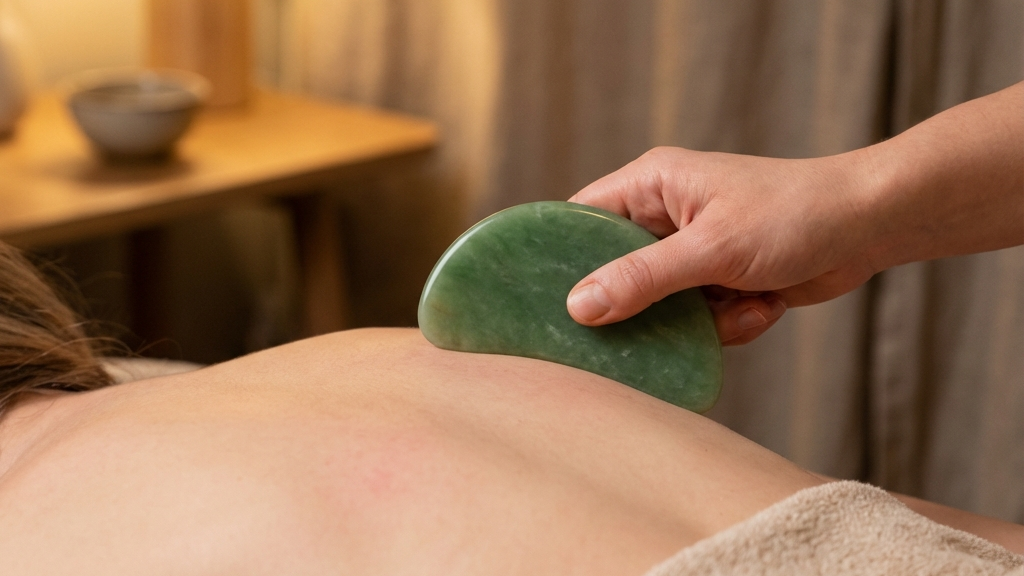
Gua Sha, often translated as "scraping therapy," is an ancient healing technique in Traditional Chinese Medicine (TCM) that has gained modern recognition for its powerful ability to treat chronic pain and inflammation. While the term "scraping" might sound abrasive, the technique is a controlled, unidirectional press-stroking of lubricated skin using a specialized instrument.
At Hope TCM Clinic, we use Gua Sha to resolve deep-seated stagnation and restore proper flow to your muscles and fascia. The tools used are smooth-edged and crafted from materials chosen for their therapeutic properties:
- Jade: Known for its cooling properties, often used on the face and neck.
- Buffalo Horn: A traditional material that mimics the chemical composition of human hair and nails, excellent for moving stagnant blood.
- Copper: A traditionally used material in TCM, copper gua sha tools are believed to support the smooth circulation of Qi and Blood through their conductive properties.
- Stone (Bian Stone): Contains trace minerals and is often used for deeper muscle work.
Unlike a casual massage, Gua Sha is a targeted therapeutic intervention designed to break localized stasis and initiate a healing response.
The Mechanism: Unlocking the Body's Healing Potential
The "Sha" in Gua Sha refers to the reddish, millet-like petechiae (spots) that appear on the skin during treatment. This is not bruising in the traumatic sense, but rather the therapeutic release of stagnant blood and metabolic waste from the superficial muscle layers.
1. Releasing "Sha" and Clearing Heat
When the skin is scraped, blood cells that have become trapped in the peripheral capillaries are released into the subcutaneous tissue. This process, known as extravasation, signals the body to flush out old blood and bring in fresh, oxygenated blood. In TCM terms, this "vents heat" and clears toxins that have accumulated due to stress or illness.
2. Breaking Down Adhesions and Scar Tissue
Chronic pain is often caused by the sticking together of muscle fibers and fascia, known as adhesions. Gua Sha mechanically breaks down this fibrotic tissue. By applying friction across the grain of the muscle, we can smooth out these rough patches, restoring the muscle's natural elasticity and range of motion.
3. Increasing Microcirculation
Research has shown that Gua Sha can increase microcirculation in the treated area by up to 400%. This surge in blood flow persists for several days after treatment, creating a sustained environment for healing. This is why patients often feel a sense of warmth and immediate relief after a session.
Clinical Applications
Gua Sha is versatile and particularly effective for conditions involving tension, stiffness, and the early stages of illness.
"Text Neck" and Upper Back Pain
In our digital age, "Text Neck"—the strain caused by looking down at screens—is ubiquitous. This posture causes the fascia of the upper back and neck to become dense and rigid. Gua Sha is exceptionally effective here, striping away the layers of tension along the cervical spine and trapezius muscles to provide instant relief from stiffness.
Shoulder Stiffness and Frozen Shoulder
For chronic shoulder issues, including rotator cuff tightness and limited mobility, Gua Sha helps by unbinding the connective tissue around the scapula. It allows the shoulder blades to glide explicitly again, reducing the "glued down" sensation many patients experience.
Boosting Immunity and Treating Colds
One of the most traditional uses of Gua Sha is for the onset of a cold or flu. In TCM, we view early cold symptoms (stiff neck, chills, headache) as "Wind-Cold" invading the body's exterior. Applying Gua Sha to the upper back and neck effectively "releases the exterior," helping to expel the pathogen before it sinks deeper into the body. Many patients report that a session at the first sign of a scratchy throat can halt a cold in its tracks.
Gua Sha vs. Cupping: Which One Do You Need?
Both techniques treat pain and stagnation, but they work differently and are suited for different areas.
- Gua Sha shines in contoured areas and smaller muscle groups where a cup might not seal well, such as the neck, jawline, and around the joints (elbows, knees, ankles). It is also superior for detecting and breaking up specific knots or gritty scar tissue (adhesions).
- Cupping, on the other hand, uses suction to lift tissue. It is generally better for large, flat muscle groups like the broad expanse of the back or the thighs.
Your practitioner at Hope TCM Clinic will assess your specific condition to determine which modality—or a combination of both—will yield the best results for you.
Aftercare Advice
Because Gua Sha stimulates movement and opens the pores, your body is temporarily more vulnerable to environmental factors immediately after treatment.
- Avoid Wind and Cold: For 4 hours after treatment, keep the treated area covered. Avoid direct exposure to drafts, air conditioning, or cold winds. The pores are open, and entering cold air can cause the muscles to seize up again.
- Hydrate: Drink warm water. The release of metabolic waste requires adequate hydration to flush these toxins out of your system.
- Rest: Your body is undergoing a healing process. Allow yourself some downtime to let the treatment settle in.
The marks ("Sha") typically fade within 2 to 7 days, depending on your circulation. Seeing these marks is a positive sign that the treatment has successfully acted on the stagnation in your tissues.
Frequently Asked Questions
Is Gua Sha painful?
It can feel intense, like a deep "good pain" that you might feel when massaging a sore knot. As we scrape over an adhesion, you might feel a bumpy or gritty texture. We always check in with you to stay within your comfort zone.
Will the scraping leave permanent scars?
No. The red marks (stagnation) are temporary and sit under the skin, not on top of it like a scratch. The skin surface remains unbroken. The redness typically fades completely within 2-7 days.
Can Gua Sha help with face puffiness?
Yes! Facial Gua Sha is a much lighter, gentler technique than body Gua Sha. It promotes lymphatic drainage, which effectively reduces morning puffiness, defines the jawline, and brightens the complexion without leaving any red marks.
How often can I get safe Gua Sha treatment?
For acute back or neck pain, we can perform Gua Sha once a week. However, we must ensure the "Sha" marks from the previous session have fully faded before treating the same area again to allow the skin to heal.
Related Treatments
You may also be interested in these complementary treatments:
- Cupping Therapy – Similar detoxification benefits through suction
- Facial Rejuvenation Acupuncture – Gua Sha is often combined with facial acupuncture
- Acupuncture – Comprehensive energy balancing
- View All Treatments